Household
Dogs and Babies: A Twelve-Week Preparation Plan
A new baby changes a household's sounds, smells, schedule and the amount of attention available to a resident dog almost overnight, and most bite incidents involving infants occur not from aggression out of nowhere but from a dog whose warning signals around the baby were consistently missed.
By Dr Samuel Adeyemi, DVM, DACVIM
9 May 2026
4 min read

Medically reviewed
Reviewed by Dr Samuel Adeyemi, DVM, DACVIM of the Dr Murphies Veterinary Review Board. Reviewed content is checked against current consensus guidance before publication.
A new baby changes a household's sounds, smells, schedule and the amount of attention available to a resident dog almost overnight, and most bite incidents involving infants occur not from aggression out of nowhere but from a dog whose warning signals around the baby were consistently missed. A structured twelve-week plan starting before the birth substantially reduces this risk.
Why Preparation Should Start Before the Birth, Not After
Dogs generalise poorly from novel objects and sounds encountered suddenly alongside a major disruption in attention and routine, which is why introducing baby-associated stimuli gradually and positively in the weeks before birth prevents the dog from associating the entire cluster of new experiences with loss of resources and attention.
Recorded newborn crying played at gradually increasing volume, paired with something pleasant such as a chew, allows habituation to a sound many dogs otherwise find genuinely distressing on first exposure at a moment when household stress is already high and supervision capacity is reduced.
Desensitising to Baby Sounds and Equipment
- Increased clinginess or, conversely, avoidance as household routines begin shifting
- Stress signals such as lip licking or turning away when near baby equipment
- Reduced tolerance for normal handling as attention decreases during pregnancy
- Guarding of previously unguarded resources as household resources feel scarcer
- Startling or barking at recorded or real infant crying sounds
Track the dog's response specifically to crying sounds and baby equipment separately from its general demeanour, since these targeted reactions are the clearest early indicator of whether more desensitisation work is needed before the birth.
Establishing New Household Routines Early
There is no diagnostic test involved in this preparation, but a dog with pre-existing anxiety, resource guarding or a history of aggression toward children should have a full veterinary behaviourist assessment well before the due date, since twelve weeks may not be sufficient time for significant pre-existing issues.
Pain assessment matters particularly for older dogs, since a dog in discomfort has a lower tolerance threshold for the unpredictable handling, noise and reduced routine that come with a new infant, making a pre-emptive veterinary check a sensible part of preparation.
Structured, Supervised Introductions After Birth
The twelve-week plan layers sound and equipment desensitisation, gradual routine changes, and independence training, culminating in structured, always-supervised introductions once the baby arrives home.
- Play recorded baby crying at low volume daily, pairing it with calm, pleasant activity
- Introduce prams, bouncers and baby-scented items gradually as neutral household objects
- Shift walk and feeding times toward the anticipated post-birth routine in advance
- Practise independent settling on a mat away from the primary caregiver's constant attention
Ongoing Management Through Infancy and Toddlerhood
Establish a permanent safe space, such as a crate or gated area, that the dog can retreat to and is never disturbed there by a child, since a reliable escape option prevents the vast majority of trapped-feeling defensive reactions.
Never leave a dog and infant or young child unsupervised together under any circumstances, regardless of how well introductions have gone, since supervision lapses of even a minute account for a large proportion of preventable incidents.
When to seek help urgently
- Growling, stiffening or any warning signal directed at the baby, however mild
- Guarding behaviour emerging around the baby's belongings, crib or feeding area
- A dog that cannot be called away or redirected from fixating on the infant
- Any bite or snap, which requires immediate professional behavioural assessment
Begin this plan with guidance from your own veterinarian or a qualified behaviourist well before the birth, particularly if the dog has any prior history of anxiety or resource guarding.
Vet-recommended
Products our review board rates for this

Lemonade Pet Insurance
9.4The lowest premiums in the category, with claims paid in minutes rather than weeks.
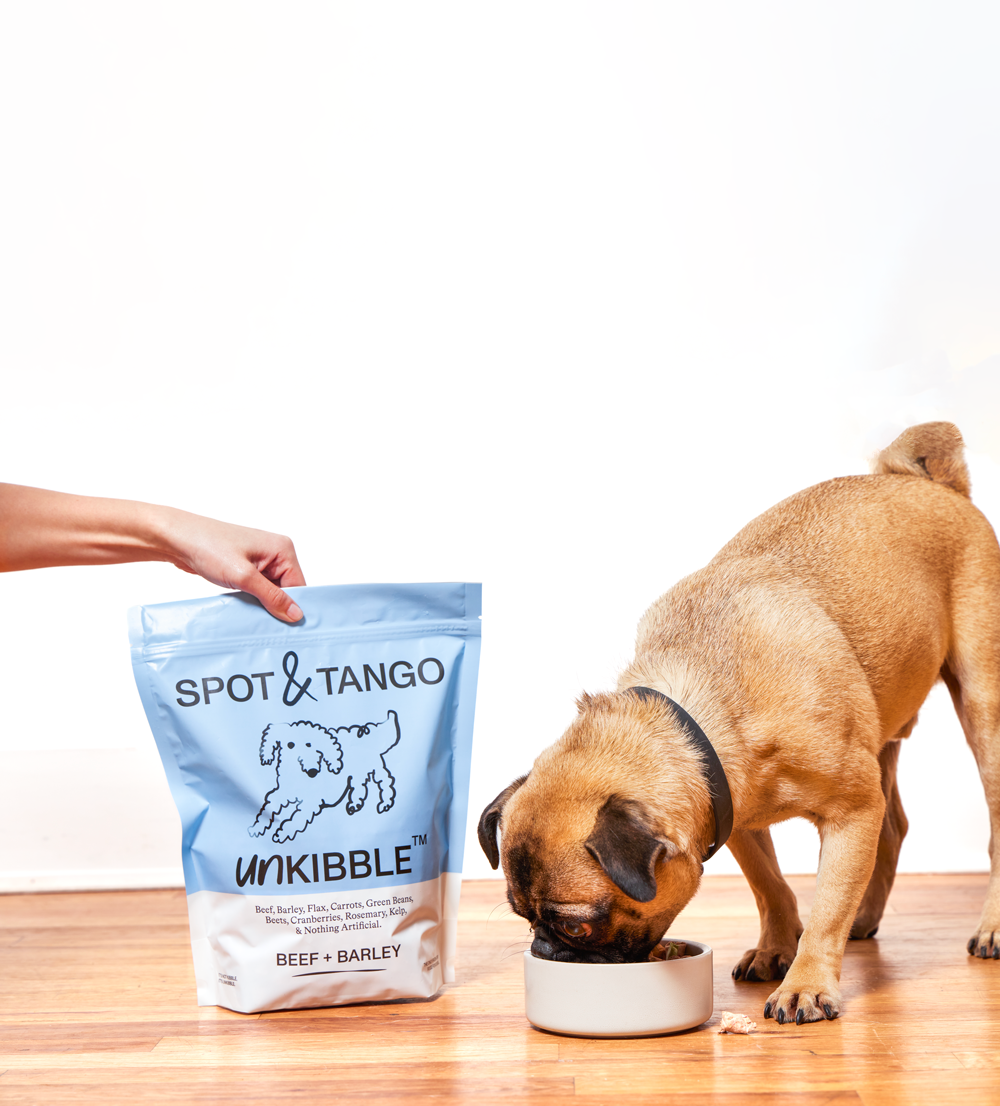
Spot & Tango
9.1Vet-formulated fresh trays and dehydrated UnKibble, portioned to the individual dog.
Dial A Vet
9.0A global team of 250+ vets and vet techs on Zoom in under fifteen minutes, flat fee.
Recommendations are chosen by the Dr Murphies veterinary review board. Some links are affiliate links and we may earn a commission; this never affects our scoring, and brands do not see our copy before publication.
Dr Samuel Adeyemi, DVM, DACVIM
Internal medicine specialist